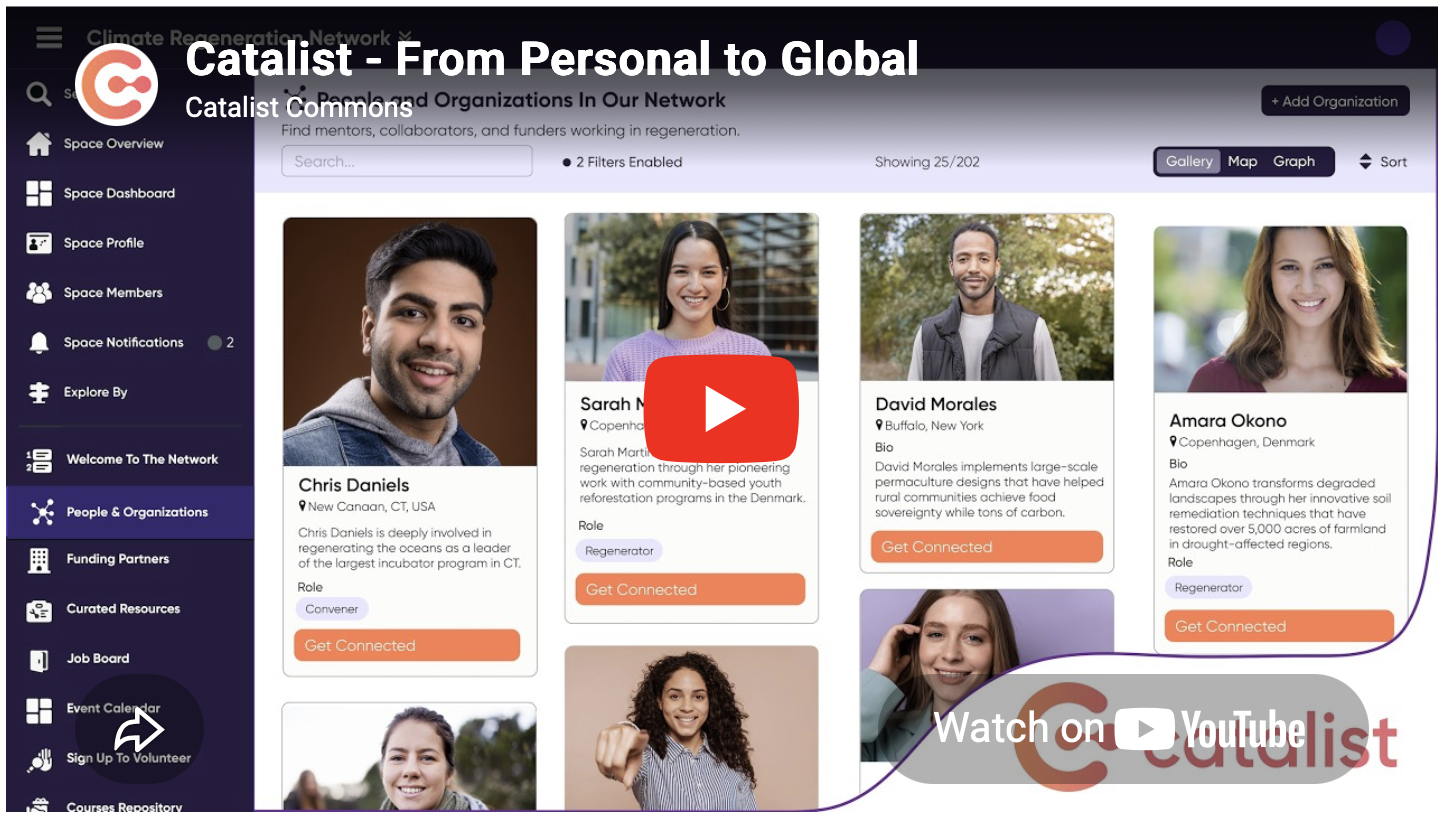
Part of our solutions framework — The Catalist Platform · OMNI-Mapping · Global Commons · Field Notes · Our Operating Model

The Catalist.Network Platform

Resolving barriers to collaboration.

We've worked continuously for 4 years on resolving the challenges our partners face. We customize, iterate, then provide the final solution to everyone through the platform.

Catalist is a think tank that listens, then builds. Most platforms in this space are funded for acquisition or extraction. They get bought, shut down, pivoted, or quietly abandoned. Their roadmaps serve their next round, not their users. We're built differently, on purpose.

The platform you can use today is what we've made so far — and the structural commitments later on this page are how we hold that posture over time.

One infrastructure. Three layers. All connected.

Most tools serve one layer in isolation. Catalist connects all three. Knowledge that starts in your personal library can flow to your community, and knowledge from the global commons can reach the people who need it most.

Your Personal Library

Your knowledge home base that travels with you across every community you're part of. Save insights from anywhere, organize them your way, and draw on them whenever you need them.

How it connects:

  • Bookmark resources from any community space directly to your library
  • Reference global commons items without duplicating them
  • Build personal collections that span multiple communities
  • Choose exactly what to share, with whom, and when
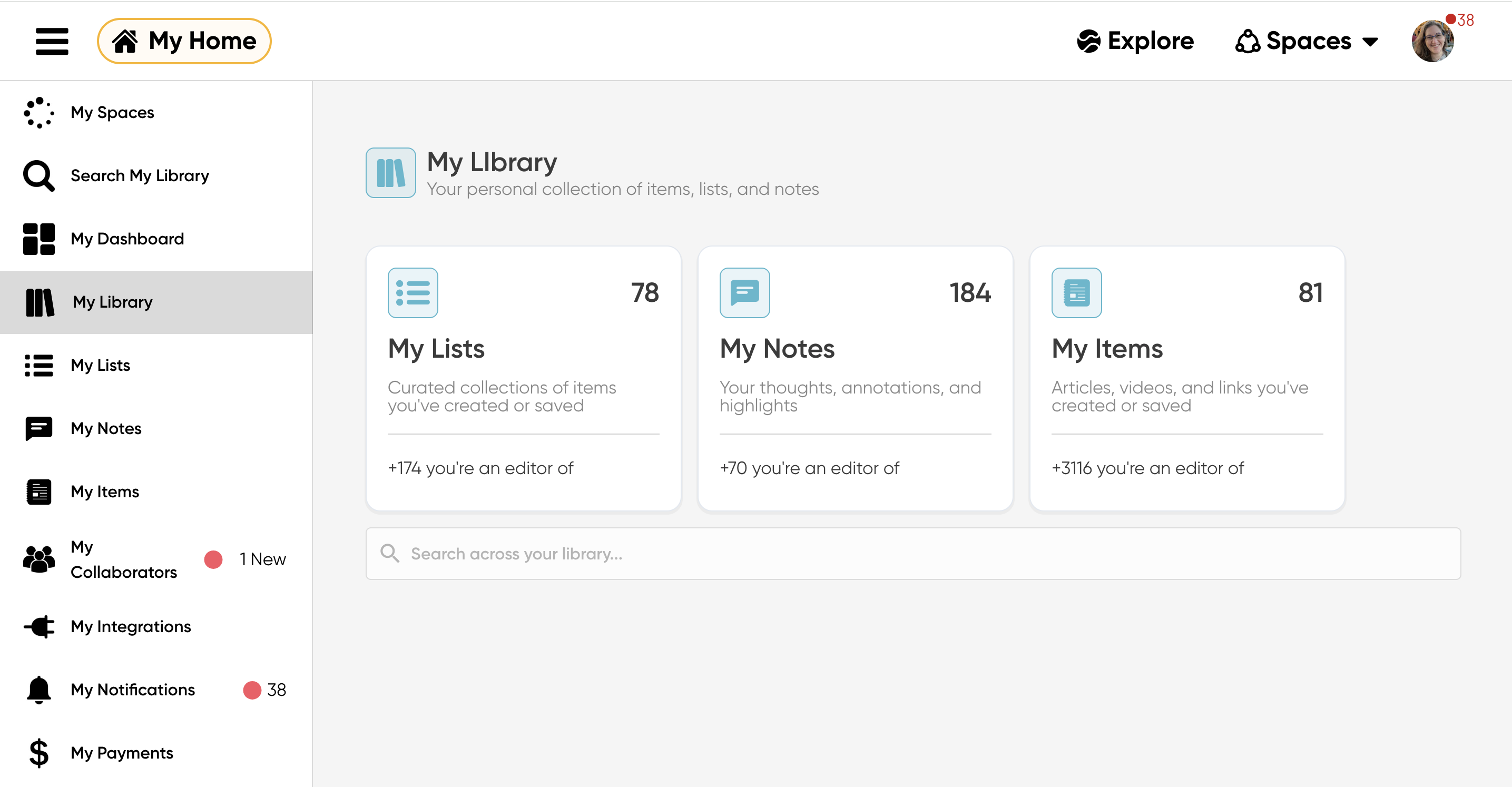
Personal Library

Community & Event Spaces

Your network's dynamic knowledge repository. Where it lives, grows, and gets applied. Bring your community together around shared resources, eliminate redundant work, and create richer experiences for every member.

How it connects:

  • Draw relevant resources from the global commons directly into your space
  • Members can save community resources to their personal libraries
  • Curate member contributions into structured, searchable knowledge
  • Contribute community insights back to the global commons
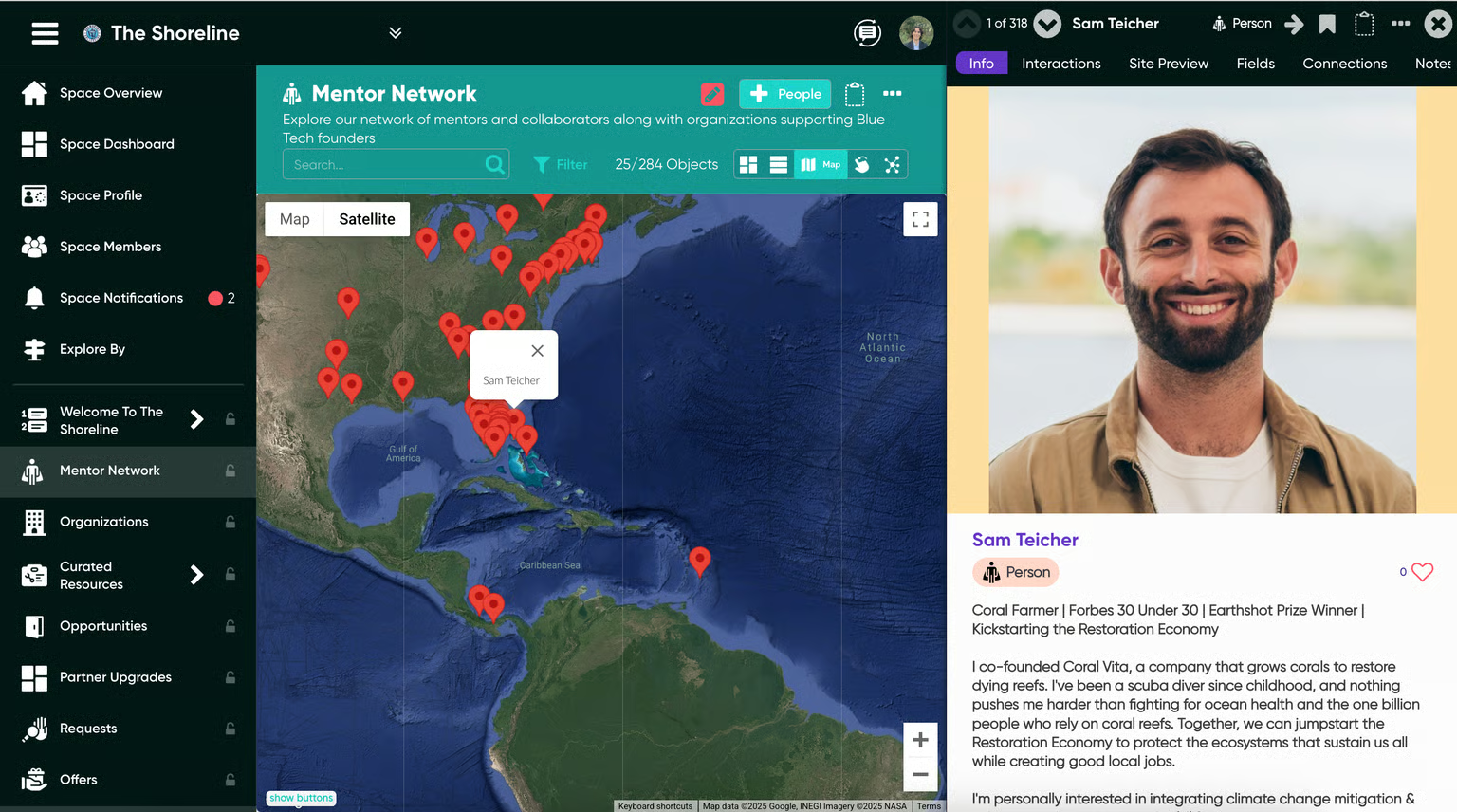
Community Spaces

Global Knowledge Commons

An open, living repository of shared knowledge that gets richer with every individual and community that contributes. The commons connects directly to community spaces and personal libraries — making global knowledge instantly actionable.

How it connects:

  • Discover connections across topics, organizations, and resources
  • Reference global resources in your community without duplication
  • Save commons resources directly to your personal library
  • Contribute your insights so others can build on your knowledge
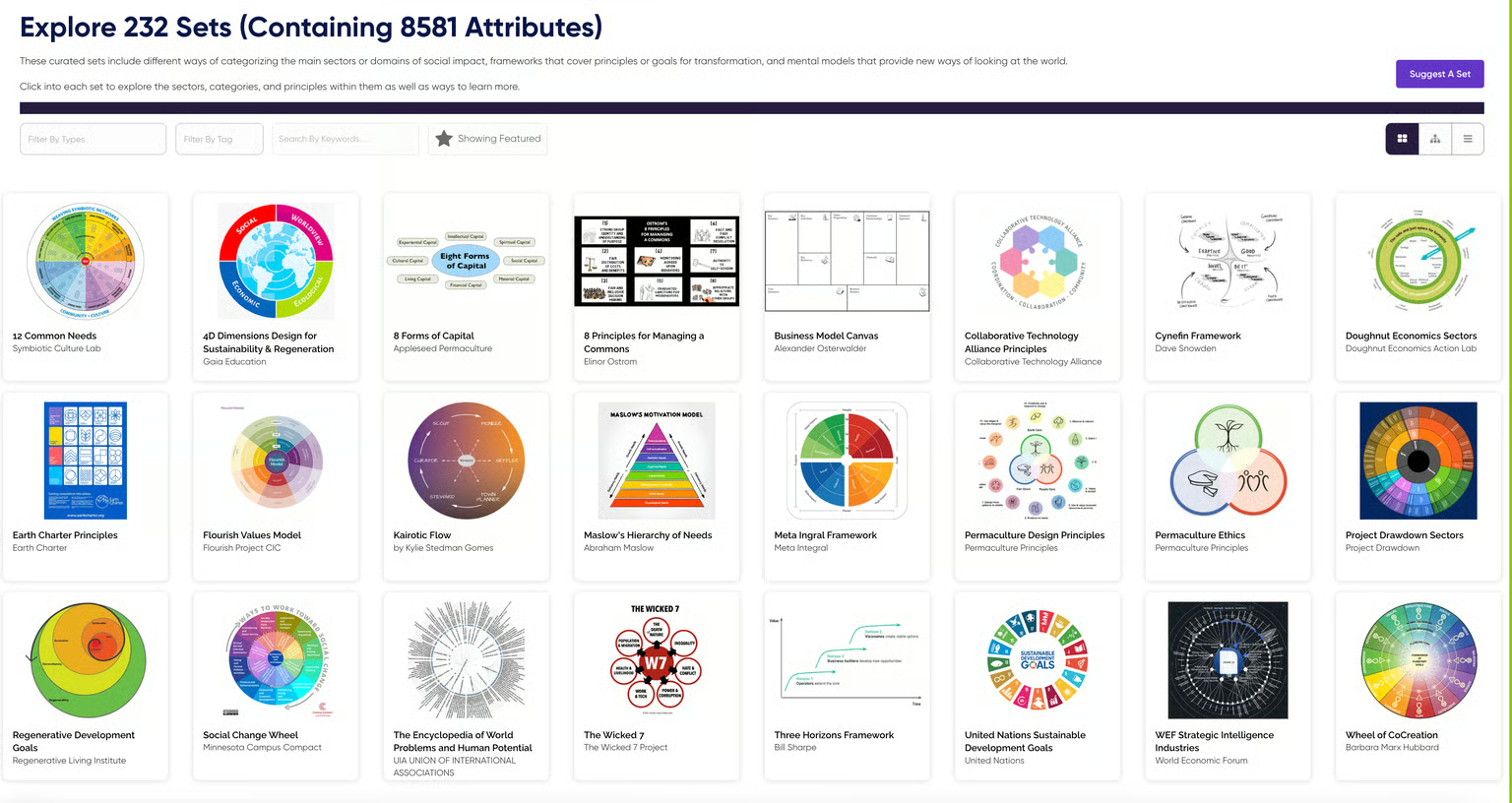
Global Knowledge Commons

Keeping context, attribution, trust and ownership intact at every layer.

From Personal to Global
The Arc
From Personal to Global

See more of what has already been built

View field notes

Three problems we kept hearing.

1

Backbone architecture for all

In Catalist, ontologies are interconnected making data sharing easy. Organizations and communities can effortlessly contribute to and benefit from the global knowledge commons.

2

Many sources, one space

Bring your community's Discord, Telegram, Mattermost, or Slack into your Catalist Group to reduce information overload and find resources when you need them.

3

Individual agency

Decentralized information collection & maintenance. Provide your community with the tools to build collective intelligence and catalyze coordinated action.

Encoded, not aspirational.

The principles that distinguish Catalist aren't policy statements or blog posts. They're legal architecture — written into our Collaborative Operating Agreement and binding on everyone involved.

No exit intent.

Catalist Network LLC is not built for sale, IPO, or acquisition. This is in our Collaborative Operating Agreement (COA), Article I §1.5 — not just a statement of intent, but a legal constraint. Founders cannot unilaterally sell the company or alter its core mission.

COA Article I §1.5

Steward-led, not founder-controlled.

Governance flows from designated stewardship roles, not from ownership percentages. The team that runs Catalist works for the mission, not for an eventual payday. As the organization matures, governance expands outward through Councils — distributed stewardship rather than concentrated control.

Governance structure

Capital participates without controlling.

Our investor structure (Investor Participation Units) explicitly separates funding from governance. Money supports the work; it doesn't redirect it. Investors don't get equity, don't get votes, don't get board seats, don't trigger exits.

Investor Participation Units

Practically speaking.

These structural commitments aren't abstract. They have direct implications for everyone who builds on or within Catalist.

Continuity.

The platform is structurally protected from being acquired and shut down. The community spaces, the knowledge commons, the integrations you build — they aren't at risk of disappearing because a different company bought us.

Mission alignment.

Features are built in service to the work, not in service to the next growth metric. When we say no to something, we say no for the right reason.

The team works for the mission.

When you talk to someone at Catalist, they're not optimizing toward an exit. They're stewarding infrastructure. That's the difference.

Keep exploring.

Next solution

OMNI-Mapping →